

- TOP
- THINK Lobby
- 【活動報告】日本の災害研究ハンドブックに寄稿

【活動報告】日本の災害研究ハンドブックに寄稿
THINK Lobbyライブラリー, おすすめ記事, 研究 2025.10.29
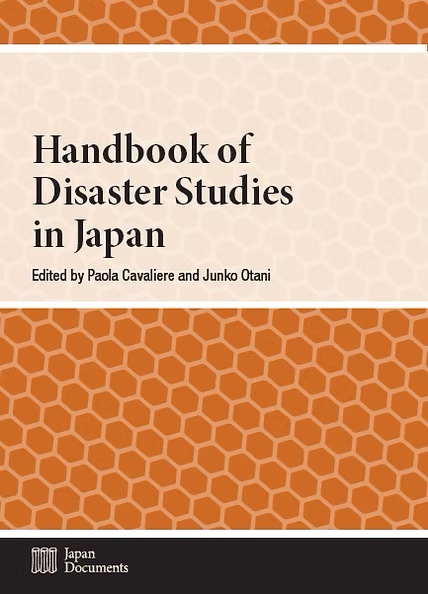
JANIC理事の小美野剛(CWS Japan事務局長)とJANICシニアアドボカシーオフィサーの堀内葵が、2025年9月に出版された「Handbook of Disaster Studies in Japan(日本の災害研究ハンドブック)」(Paola Cavaliere、Junko Otani編、MHM Limited,発行)に寄稿しました。また、JANIC正会員であるピースボート災害支援センターの上島安裕事務局長も寄稿されています。
本書は、21世紀の日本における災害の概念、意味、経験について批判的に考察したものです。各章を通じて、災害における人的要素の認識が中心的なテーマであり、理論的視点となっています。
この現象学的視点は、災害が、多階層のガバナンス、政治的準備、個人の対応、そして被災者層における社会的、文化的、構造的、環境的、国境を越えた文脈的ダイナミクスと交差する接点として、こうした事象を分析する上で重要な役割を果たしています。また、公共文化における災害の媒介化を、事象の社会的構築を明らかにする曖昧性解消と枠組み設定の行使を通じて災害を封じ込める人間の能力の尺度として論じています。
過去30年間の日本における災害研究の進展、および文脈的な災害政策の変化と社会的プロセスは、災害研究の実証的領域が変化していることを示しています。こうした変容が、学際的分野としての災害社会学への高い関心を喚起していると言えます。
本書は、災害の公共文化における媒介化を、解釈と枠組み設定の営みを通じて災害を社会的に構築する過程を明らかにし、災害を封じ込める人間の能力の尺度として捉えることで、批判的災害研究の学術的貢献を拡大します。若手から著名な研究者、独立研究者、NPO・NGO活動家、アーティストまで多様な背景を持つ寄稿者陣は、国内外に居住する国際的・日本の研究者プールを形成し、この分野に包括的かつ専門的な視点を提供するのに十分な力量を備えています。
詳細:https://www.mhmjapandocuments.com/copy-of-advent-of-sound-in-japanese
Handbook of Disaster Studies in Japan
Table of Contents 目次
(Editors, Paola Cavaliere and Junko Otani 編)
Contributors
Acknowledgements
Preface
Abbreviations
Introduction (Paola Cavaliere and Junko Otani)
Part 1—Lenses:
Chapter 1. Hōjōki and Its Legacy in Japanese Perceptions of Disaster (Haruko Wakabayashi)
Chapter 2. Fighting the “Morbid Fear” of Fire in Tokyo: 1872–1945 (Steven Wills)
Chapter 3. Disaster Research and Practice: Development of the Field Since the Great Hanshin-Awaji Earthquake (1995) (Rinpei Miura)
Chapter 4. Japanese Cities, Disaster, and Urban Sociology (Wesley Cheek)
Chapter 5. The Evolution of Disaster Education in Japan (Yusuke Toyoda)
Chapter 6. Disability and Disaster (Tadashi Yasuda and Toru Shibata)
Chapter 7. Aging and Disaster Resilience (Hiroshi Ueda)
Chapter 8. Women and Children in Disasters (Junko Otani)
Chapter 9. Disasters without Borders: The Coronavirus Pandemic, Global Climate Change, and the Ascendancy of Gradual Onset Disasters (Katsuya Yamori and James D. Goltz)
Chapter 10. Japan’s Disaster Culture and Local Communities (Yoshiyuki Yama)
Chapter 11 Disaster Medical System in Japan (Jing Li)
Chapter 12. Businesses and Disaster: Japanese Companies’ Responses to Vulnerability through Corporate Disaster Prevention and BCP (Takuzo Osugi)
Chapter 13. International Students and Disasters (Yuwen Gao)
Part 2—Human Activities:
Chapter 14. Big Data-Driven Disaster Management and Resilience (Yuya Shibuya)
Chapter 15. It’s Who You Know: How Social Networks Help Cities Rebuild with Renewables after Disaster (Timothy Fraser)
Chapter 16. Social Capital Differences in Disaster Resilience: A Comparison between China and Japan (Yixuan Wang) Chapter 17. Strong Together: The Critical Role of Bridging and Linking Social Capital in Evacuation Outcomes (Timothy Fraser)
Chapter 18. Community Preparedness and Emergency Response for Natural Hazard-Triggered Technological Accidents (Nobuhito Ohtsu, Ana Maria Cruz, Yuko Araki, Akihiko Hokugo, and Hyejeong Park)
Chapter 19. Disaster Risk Management and Formal Non-Governmental Actors in Japan: Knowledge and Learning-Oriented Initiatives of Post-3.11 NGO/NPO Networks (Kamila Szczepanska)
Chapter 20. Networks of Non-Profit Organizations in Japan’s Disaster Recovery (Hiromi Akiyama)
Chapter 21. Emergency Response to 2020 Kumamoto Food amid COVID-19 (Yasuhiro Ueshima and Takeshi Komino)
Chapter 22. The Evolution of Japan’s ODA Disaster Response, with Special Reference to Indonesia and the Philippines (Junko Otani)
Chapter 23. Japan’s Disaster Risk Reduction Diplomacy and the Sendai Framework for Disaster Reduction (Elizabeth Maly)
Part 3—Disaster Experiences:
Chapter 24. Storytelling and the Arts as Tools in Disaster Education: Tohoku University’s “Kataritsugi” and the Stories of 3.11 (Julia Gerster, Akihiro Shibayama, and Madoka Ono)
Chapter 25. COVID-19 and SDGs: Civil Society Perspectives (Aoi Horiuchi)
Chapter 26. Interfaith Chaplaincy Movement in Japan Precipitated by the Tsunami in 2011 (Yozo Taniyama)
Chapter 27. Symbolic Recovery, Intellectuals, and External Supporters in Local Reconstruction (Yoshiyuki Yama)
Chapter 28. Risks Confronting Buddhist Temples in Responding to COVID-19 (Tim Graf)
Chapter 29. Women in Faith-Based Disaster Response to the 2016 Kumamoto Earthquake (Paola Cavaliere)
Chapter 30. Negative Social Support During the COVID-19 Pandemic: Experiences among Mothers of Infants and/or Young Children in Japan (Miyako Kimura)
Chapter 31. Mobilized Mothers Triumph: Social Movement Protest to the Triple Disaster (Nicole Freiner)
Chapter 32. Women and Resilience in Japan: The Role of Kirikiri’s Fujinkai Leaders in Disaster Management (Carmen Grau Vila)
Chapter 33. The Great Hanshin-Awaji Earthquake and the Migrant Community in Kobe (Seonkil Kim and Rie Ogasawara)
Chapter 34. Resilience in the Everyday: Older People in Disaster Relocation (Stephen Ward)
Chapter 35. Shuri Castle: Okinawa as a Site of Vulnerability and Resilience (Ra Mason)
Chapter 36. Loss, Place, and Rituals: Community Commemoration in Iwate Prefecture after 3.11 (Nao Sakaguchi and Julia Gerster)
Chapter 37. The Importance of Remembering Public Transportation Accidents in Japan (Christopher P. Hood)
Chapter 38. Hiroshima’s Forgotten Voices: Resilience in Hibakusha Video Testimony and Memorialization (Lauren Constance)
Chapter 39. Compassionate Grounds: Contemporary Artists’ Responses to the Ongoing Recovery of Tōhoku (Emily Wakeling)
Chapter 40. Popular Culture of Disaster: Developments Post-3.11 (Akiko Nagata)
Conclusion (Paola Cavaliere and Junko Otani)
Appendix 1: List of Disasters 1945-2025
Appendix 2: Negative Social Support Experiences Study
Index




















































































































FOLLOW US