
NEWS
2025 NEA CSO Statement
*Download the PDF version here.
2025.10.23.
Main Message
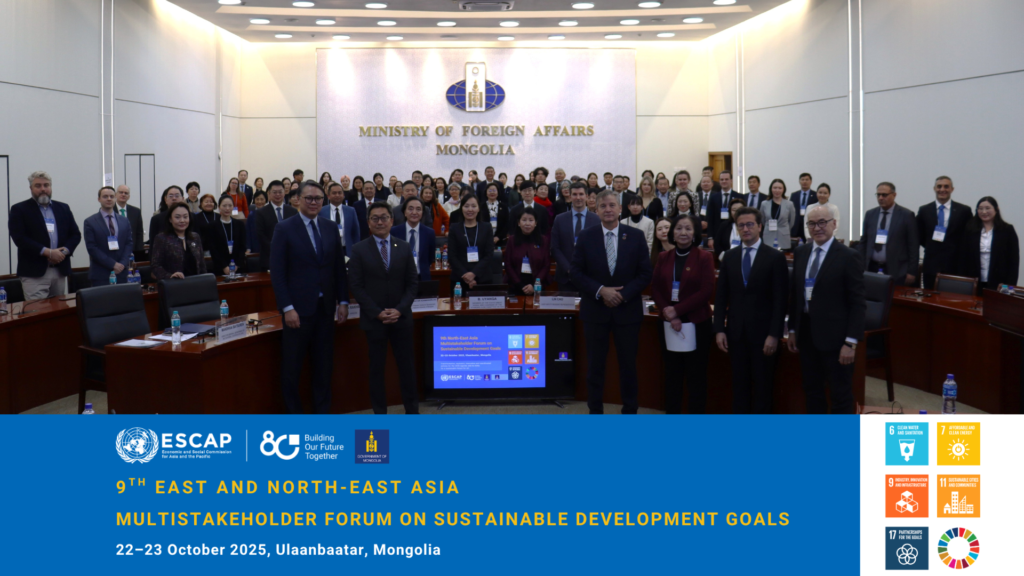
As members of Civil Society Organizations (CSOs) from China, Japan, Mongolia, Russia, and the Republic of Korea, we extend our deep gratitude to ESCAP for this opportunity to deliver a collective statement at the 9th Northeast Asia Multistakeholder Forum on the Sustainable Development Goals for Asia and the Pacific, held in Ulaanbaatar, Mongolia from Oct 22~23, 2025.
On October 21st, we gathered here in Ulaanbaatar, Mongolia, for the Civil Society Forum, which brought together CSO representatives from across our subregion. The forum served as a valuable platform to exchange perspectives, share experiences, and identify common priorities for accelerating the 2030 Agenda.
This NEA Forum represents a vital opportunity to strengthen subregional cooperation, learn from one another, and amplify the voices of people across our subregion. Northeast Asia continues to be a key socioeconomic actor – driving innovation, manufacturing, and technology, and contributing significantly to the global GDP and trade – with nearly one-fifth of the world’s population living in this subregion.
Yet, the Northeast Asia subregion faces significant challenges that must be addressed to realize the 2030 Agenda. Environmental degradation, rapid urbanization, demographic changes, and persistent geopolitical tensions continue to threaten progress. With only five years remaining to achieve the Sustainable Development Goals adopted in 2015, it is more crucial than ever that all stakeholders work together with renewed commitment and solidarity.
Civil society plays an indispensable role in ensuring that the promise of the 2030 Agenda becomes a reality – to leave no one behind. Therefore, we call on all governments and ESCAP to safeguard civic space, uphold the rights of all right-holder groups, and make greater efforts to strengthen multi-stakeholder cooperation in this subregion.
In continuation of this collective commitment, for the SDGs under review this year in preparation for the 2026 APFSD and HLPF, we would like to highlight in particular the following recommendations:
In SDG 6, it is essential to prioritize addressing the water and sanitation crisis, especially among vulnerable and marginalized groups and communities, by increasing ODA to Water, Sanitation, and Hygiene as grant finance. We must ensure that all areas have adequate facilities, especially in rural areas that currently lack safe and sustainable access to clean water. Furthermore, a locally responsive framework supported by accountable governance and sustainable financing is also urgently needed. This is vital in groundwater protection as well as tackling water contamination-related diseases. In addition, developing agreements and cooperation between countries on transboundary rivers is essential to ensure wastewater treatment.
On SDG 7, there exist issues with inadequate renewable energy transitions, a lack of transparency of environmental and social impact assessment programs, Energy grid systems that hinder the transition to renewable energy, and an unjust transition framework. Governments in this subregion must renovate their energy grid for energy transition, revisit the calculation of emissions to ensure adequacy, transparency, and strengthen commitment to transitioning to clean energy while ensuring a just transition. Critical Minerals for clean energy technologies efforts by countries and overall NEA cooperation should not undermine the achievement of all other SDGs.
On SDG 9, there is a wide range of issues the subregion must face, such as building disaster-resilient infrastructure, disparity of local infrastructure, lack of accountability and transparency in digital platforms, regulation of artificial intelligence, and providing support for small and medium-sized enterprises, as well as startups. Governments must reconsider how we approach and regulate rapidly developing artificial intelligence, strengthen STI (science, technology, and innovation) governance, and conduct environmental and social impact assessments of the infrastructure of various sectors.
On SDG 11, governments in the subregion should promote access to public services such as transportation, housing, and better environmental conditions, and enhance the safety for citizens. While governments have invested in renovating the infrastructure of transportation, housing, waste management, etc., the situation around transportation, living environment, and citizens’ safety has been worsening. This is due to multiple reasons, including increased traffic volume, ageing infrastructures, rapidly rising living costs, Insufficient support for rural infrastructure, and poor responding to disasters. This has especially impacted vulnerable people in society, including women, youth and children, elders, and people with disabilities.
The achievement of these four goals will require further progress of SDG 17. Currently, in the sub-region, there are several barriers to civil society participation, such as inadequate law enforcement, a lack of available disaggregated data, a lack of sustainable funding, and shrinking civic space at the national and international levels. Governments must ensure a safe space for civil activism and ensure their inclusion in the decision-making process at both national and international levels, such as the SDGs process, offer long-term financial and technical assistance for NGOs to engage in multilateral dialogues, and have more frequent exchanges with stakeholders before, during, and after key UN conferences, including the youths. In this regard, youth participation remains vital. The presence of young people in high-level political fora remains limited in this region. There must be a system where youths’ voices are not only heard but also incorporated in policymaking. We, therefore, urge the UN, the member states, and all stakeholders in the sub-region to take collective responsibility in realizing our shared goals.
Review of Specific Goals
SDG 6 Clean Water and Sanitation
Current situation and challenges
1) Common situation and challenges among NEA Sub-Region
Addressing water access and sanitation challenges in Northeast Asia requires a multifaceted approach that integrates infrastructure modernization, gender-sensitive policies, environmental health protection, and strong intersectoral cooperation. Key actions include:
-Mainstreaming gender-sensitive approaches to sanitation, particularly in rural and disaster-prone areas, to ensure dignity and health for all.
-Prioritizing climate-resilient infrastructure and upgrading aging systems to maintain universal water access and sanitation.
-Strengthening transparency, public participation, and civil society oversight to ensure inclusive governance of water resources and services.
-Tackling pollution and environmental health risks by enforcing regulations, supporting clean technologies, and conducting health assessments for impacted communities.
By focusing on these critical areas, governments in Northeast Asia can ensure that everyone—especially vulnerable groups—has access to clean water, safe sanitation, and a healthier environment.
2) Country specific situation / challenges
China: It is essential to mainstream gender in water actions through the lens of menstrual health and hygiene (MHH) practices, highlighted by persistent urban–rural disparities. The disparity between the urban and rural areas is stark, according to UNICEF China; more than 80% of rural schools in Qinghai Province are still using pit latrines. These are symbolized by some toilets that are not safe enough, lack lighting & hand-washing facilities, and have smells, with some lacking privacy with no doors or stalls. Furthermore, after floods, residents sometimes need to be relocated to temporary shelters where relatively adequate facilities like showers and toilets still fail to guarantee privacy for bathing and using the toilet.
Japan: Access rate to water supply system is almost 100% yet faces growing challenges including aging infrastructure and delayed climate adaptation, which make it difficult to maintain universal access without leaving anyone behind in the future. Global progress on SDG 6.1 and 6.2 remains slow, and people living in low-income countries, fragile contexts, rural communities, and minority ethnic and Indigenous groups face the greatest disparities. Though the government of Japan has historically provided a much higher share of total ODA to water supply and sanitation (WSS) than other donors, averaging at 6.8% vs. 3.3% (2015-2021), much of Japan’s WASH infrastructure ODA went to countries with relatively small populations lacking access to water and sanitation. About one-third of country-specific WSS ODA went to 24 countries already on track for universal access (≥99% coverage).
Mongolia: Intersectoral coordination, financing, partnerships, and participation mechanisms related to clean water and sanitation remain weak. Policy coherence, investment planning, monitoring systems, and transparency are insufficient, leading to constrained collaboration among public institutions, private entities, and international organizations. Also, there is no planned funding to support civil society and public oversight participation in areas such as monitoring water accessibility and quality, or contributing to budget transparency.
South Korea: The environmental damage and public health impacts surrounding the Youngpoong smelter are very severe and have already been identified in several investigations. The health risks faced by local residents are alarming. Scientific blood analysis has confirmed that cadmium concentrations in residents near the smelter are two to three times higher than the national average. Cadmium poisoning is known to pose severe health risks; historically, during the 1960s in Japan, the “Itai-Itai disease,” caused by cadmium from a zinc smelter, became a major public health disaster. Tragically, a worker at the Youngpoong Smelter also died from this disease. Furthermore, mercury levels in fish caught at Andong Dam were nearly twice the legal safety limit in 2022, leading to an official fishing ban in the area, and also, multiple workers have lost their lives due to hazardous working conditions at the smelter, further highlighting the urgent need to address this issue.
Russia: More than 18 % of the population in the RF has no access to clean drinking water, with many natural water bodies that are actually used by local people for drinking (springs, lakes, etc.) still unregistered and not under state control. Ultimately, 88 % of wastewater is not treated or treated poorly. In 2024, cross-border water basin cooperation programs between EU-Russia neighbor countries were suspended, combined with a challenge to establish formal agreements for the Kura-Arax river affecting South Caucasus countries.
Solutions and recommendations
1) Common Recommendations
Across Japan, Mongolia, China, Korea, and Russia, four common priorities emerge. All countries emphasize increasing investment and ensuring sustainable financing for WASH. In addition, strengthening governance, coordination, and accountability across sectors is essential. The necessity of integrating WASH into broader national frameworks, including health, climate, and sustainable development policies, is widely recognized. All countries highlight the need for improved monitoring, transparency, and data systems to ensure accountability and track progress toward SDG 6.
2) Country-Specific Recommendations
China: From a gender perspective, gender-responsive WASH initiatives are required, such as the Child-Friendly Toilet Project and addressing women’s experiences during climate disasters, like floods. Civil society can address menstrual health, sanitation, and gender equality together by researching at the local level, advocating for gender-transformative WASH systems—spanning infrastructure, policy, research, and finance—to build a more inclusive and resilient future. Governments should also provide more funds and implement WASH-related and water-disaster-resilient infrastructure and research.
Japan: It is essential to prioritize addressing the water and sanitation crisis, especially among vulnerable and marginalized communities, by increasing ODA to WASH as grant finance. Ensuring that WASH is embedded in health policies, strategies, and finance, and prioritising WASH to strengthen climate resilience, with the required finances, are needed. The UN Water Conference in 2026 presents a vital opportunity for world leaders to come together and reaffirm their strong commitment to achieving Goal 6 without leaving anyone behind.
Mongolia: A regionally responsive, medium-term policy framework supported by accountable governance and sustainable financing is urgently needed. Groundwater protection, balanced regional development, and water security must be prioritized. Civil society organizations play a vital role in improving water access and quality, increasing inclusive participation, engaging in policy dialogue, and strengthening international cooperation and oversight mechanisms. Their active involvement is essential to ensure transparency, accountability, and long-term resilience in the water sector. Those can be done by establishing institutional mechanisms to ensure cross-sectoral coordination, developing a 10-year policy aligned with the SDGs, and collecting and disclosing data on commitments and performance indicators. Increasing investment in the water exploration and protection sector, supporting local-level financing and empowerment, allocating resources for inspection, oversight, and monitoring, promoting government–civil society–private sector collaboration through policy support, and establishing effective coordination mechanisms are respectively needed to contribute to progress on SDG6.
South Korea: To resolve the issues caused by contamination, governments should establish an official task force to relocate smelters and designate the contaminated site as a brownfield to ensure full environmental restoration. Additionally, comprehensive public health measures must be implemented for affected residents. A renewable energy complex may be considered as an alternative development plan after environmental restoration to support the local community. The United Nations is encouraged to engage with governments and industry to support a fair and sustainable transition based on international best practices.
Russia: Developing agreements and cooperation between countries on transboundary rivers is essential, ensuring 100% wastewater treatment, including through the promotion of small-scale solutions in the rural areas (individual and local WWT facilities, dry toilets, biological WWT technologies). Furthermore, integrating drinking water and sanitation issues into Climate Action Plans & Flood Risk Management Plans involving both public and private stakeholders is desirable, with the need to promote the issues above within the Conference of the Parties of UNFCCC.
SDG 7 Affordable and Clean Energy
Current situation and challenges
1) Common situation and challenges among NEA Sub-Region
While there is clearly some political will in Northeast Asia to transition to renewable energy, deeper structural challenges, such as monopolistic power companies, entrenched coal industry interests, governance gaps, and geopolitical tensions, further complicate the pace of this transition. A multifaceted approach is needed, encompassing both the technical aspects of the energy transition (grid integration, infrastructure resilience) and the social aspects (community engagement, worker rights).
2) Country specific situation / challenges
China: The critical issue is the link between the energy crisis and workers’ rights. Climate-induced energy rationing has led to violations of decent work principles (SDG 8), resulting in forced, unpaid days off, excessive overtime, and unsafe factory temperature.
Japan: Attention is drawn to the vulnerability of infrastructure (including electricity stations, nuclear plants, and solar panels), which exposes the energy system to climate risks. Furthermore, the consistency between the Strategic Energy Plan and the global 1.5°C target is unclear, and the government struggles to balance ambitious climate goals with measures to address energy poverty among vulnerable, often elderly, households.
Mongolia: It is spotlighted that information about environmental impact assessment programs is not transparent, and there is a critical lack of social impact assessment and communication with local communities. This is compounded by a massive $11.5 billion funding gap for NDC implementation and the intense resistance from the coal sector, which keeps the country’s energy strategy centered on coal growth. This failure contributes to a sharp 30% electricity price hike in 2025, which threatens to push households reliant on electric heating back to coal. Compounding the governance issues, emissions from the dominant mining sector are excluded from national calculations, while unsubstantiated emissions calculations from the pastoral livestock sector are centered in NDCs. Development donors should stop supporting false climate and energy transition solutions like coal infrastructure enhancement, coal-to-gas, waste-to-energy and factory farming.
South Korea: It shows strong policy commitment to expanding renewable energy, yet its power system — long dominated by fossil fuels — remains constrained by deep structural challenges. One of the biggest obstacles to accelerating renewable deployment lies in grid bottlenecks that curtail generation and prevent new projects from connecting. This is largely due to the state-owned utility’s entrenched monopoly, which prioritizes operating fossil fuel plants over expanding grid flexibility and renewable integration.
Russia: The combination of cheap fossil energy resources and a decline in foreign investment in renewable energy projects make Russia’s transition to renewable energy highly unappealing from a market perspective. The country’s high share of RE is misleading, relying on decades-old hydropower, while solar and wind generation remain below 1%. Given the current geopolitical environment, there is virtually no opportunity for civil society to influence energy policies, which continue to prioritize fossil fuel development.
In youth perspective, around north-east asia, environmental and energy education largely focus on theory-based, with few institutionalized pathways for students to engage in practical renewable energy or efficiency projects at the community level. This gap not only weakens the development of future clean energy leaders but also reduces the progress on spreading out the importance of connection between the youth user and creative local issues.
Solutions and recommendations
1) Common Recommendation
The transition to renewable energy in Northeast Asia must be a comprehensive process, integrating social safeguards, inclusive governance, regional cooperation, and a modernized energy grid to simultaneously meet climate goals and social equity standards. This process requires careful attention to both environmental sustainability and the well-being of communities.
2) Country Specific Recommendation
China: The Chinese government needs to establish a “just transition” framework at the local level, including income protection, and integrate climate into occupational health and safety (OHS) standards. It should also invest in lifelong learning and ensure formal and direct social dialogue mechanisms for workers and civil society organizations.
Japan: Governments should strengthen efforts to improve energy access in developing countries while avoiding trade-offs, and increase support, particularly to reduce regional inequalities.
Mongolia: Rooftops need to be inspected and mapped to qualify for solar power development and BESS (energy storage system) connectivity. Update incentives and feed-in tariffs (FIT). Add quantified solar and green rooftop commitments to the Ulaanbaatar region to the Nationally Determined Contributions (NDC). Update NDC 3.0 to align the Energy Transition Action Plan with the Critical Minerals Strategy and establish a plan to measure and reduce carbon dioxide emissions from the mining sector. Furthermore, the Minerals Act should be revised to mandate disclosure of carbon dioxide emissions and climate change reporting from the mining sector. Review the method for calculating emissions from livestock farming. Nomadic livestock farming does not accumulate manure. Stop supporting factory farming, a major source of emissions.
South Korea: The Korean government should reduce the guaranteed grid capacity for fossil fuel generation to ensure equitable grid access for renewable energy. Furthermore, it should establish an independent regulatory body to oversee transparent and equitable grid management.
Russia: Neither recommendations to the government nor any influence on Russia through agencies are considered feasible.
In the youth perspective, to foster youth challenges, governments should institutionalize education-based renewable energy programs by mandating clean energy facilities (e.g., solar panels) in schools, Colleges etc, creating “living laboratories” like Korea’s Green School Program. Local authorities must implement structured youth-to-community projects, such as student-led energy audits of public buildings, which allow youth to gain hands-on experience, measure benefits, and communicate local issues to the public. Finally, establishing national eco-school certification schemes (like Japan’s Eco-School Initiative) will incentivize schools to become hubs for cross-sector collaboration, fostering the leadership needed for the clean energy transition.
SDG 9 Industry, Innovation and Infrastructure
Current situation and challenges
1) Common situation and challenges among NEA Sub-Region
Northeast Asia has achieved remarkable economic success through rapid industrial growth and technological advancement. However, the region continues to face challenges in realizing inclusive and sustainable industrialization. The National Development Strategies of many countries have concentrated resources in capital regions, thereby widening regional disparities and limiting the development of local industries.
At the same time, digital and AI transformation is reshaping the industrial and social landscape. Emerging technologies such as artificial intelligence and big data are expanding opportunities for innovation but also pose new governance and ethical challenges. In particular, the monopoly of digital platforms and algorithm-driven content exposure have fueled polarization and disinformation, undermining fair competition, digital rights, the public sphere, and democracy.
Moreover, digital innovation and smart infrastructure often overlook the principle of accessibility, as set out in international standards promoted by the United Nations. Without disability-inclusive design and universal accessibility, innovation risks deepening inequality rather than reducing it.
2) Country specific situation / challenges
Japan: Japan faces challenges from aging infrastructure, climate change, and rural depopulation. While industrial competitiveness remains high, urban concentration limits regional industries. Balancing growth, environment, and accessibility for vulnerable groups remains a key issue.
Mongolia: Mongolia’s fragmented STI system and low R&D investment hinder innovation. Weak coordination and institutional support push researchers to the private sector, delaying transition to a knowledge-based, inclusive economy. Many STI parks are only on paper; licenses lapsed and services (incubation, testing, TT/IP) are thin.
South Korea: Korea’s digital and AI transformation has improved access to information but increased risks to democracy and human rights. Platform monopolies spread disinformation and deepen polarization. Despite the AI Basic Act, safeguards against bias and surveillance remain weak.
Russia: Russia faces severe challenges in achieving SDG 9 due to rapid infrastructure deterioration, international isolation, and declining technological cooperation since 2022. Sanctions have reduced access to advanced technologies, foreign investment, and global research networks. As a result, industrial productivity and innovation have stagnated, while regional disparities have widened.
Solutions and recommendations
1) Common Recommendations
To achieve inclusive and sustainable industrialization in Northeast Asia, national governments must prioritize balanced regional development and equitable participation. Industrial policies should be decentralized beyond capital regions, investing more in local and rural innovation hubs. Ensuring the participation of women, persons with disabilities, and marginalized communities in industrial and technological development is essential to making growth both fair and sustainable.
Governments and industries must ensure that digital and AI transformation is guided by human rights and accessibility principles, as reflected in the international standards promoted by the United Nations. Governments and industries should integrate universal accessibility and disability-inclusive design into digital innovation and smart infrastructure. Innovation that excludes people with disabilities not only undermines equality but also limits the full social and economic potential of technology.
International organizations should establish universal norms to ensure platform accountability and the ethical development and use of AI, considering the transnational flow of data and global influence of digital platforms. Meanwhile, national governments must strengthen transparency and accountability, and create fair regulatory frameworks that curb disinformation and hate speech without undermining freedom of expression. Governments should also guarantee public participation in technology governance so that citizens can actively shape how AI and digital systems are developed and regulated.
2) Country specific recommendations
Japan: The Japanese government should promote inclusive industrial policies that balance innovation with environmental protection and accessibility. It should support SMEs and local industries to reduce regional disparities.
Mongolia: The Mongolian government should increase R&D investment and coordinate STI policies across ministries. It should also establish incentives for researchers and integrate digital infrastructure to foster innovation. Shift from building real estate (STI parks) to a model where services and capacities are funded first—labs, standards, and tech transfer – backed up by demand-anchored procurement.
South Korea: Korea should institutionalize citizen participation and strengthen data transparency to ensure inclusive and democratic innovation in the digital and AI era. The government must enhance platform accountability and align the AI Basic Act with international human-rights standards, while businesses adopt responsible practices that make ethical and trustworthy AI a foundation for sustainable development.
Russia: The Russian government should modernize public infrastructure and restore international scientific cooperation. It must ensure civil-society participation and promote equitable resource distribution for sustainable innovation.
SDG 11 Sustainable Cities and Communities
Current Situation and Challenges
1) Common situation and challenges among NEA Sub-Region
In NEA subregion, governments have made investment to renovate infrastructure of transportation, housing, waste management and so on, but due to multiple reasons including increased traffic volume, ageing and rapid rising of living costs, the situation around transportation, living environment and citizen’s safety have been getting worse, especially among the people with vulnerabilities, including women, youth and children, elders, and people with disabilities. Citizen participation in urban planning, renovating housing and public transportation have been lacking among the sub-region. Environment pollution, including air pollution and ineffective waste management have been hampering the living condition of the people.
2) Country specific situation / challenges
China: Despite the progress of nationwide infrastructure development, human security and safety has been lacking especially in vulnerable populations such as women, people with disabilities, and specific ethnic groups. Insecurity among women has increased, not only traffic and food safety, but also public security. Environmental pollution such as air quality is getting worse in many cities, and lack of data and mechanisms hinders people’s efforts for participation and accountability.
Japan: Disasters are major threats of Goal 11 in Japan. Massive infrastructure investment and revision of the Disaster Management Act improved disaster risk management, but ageing and climate change are giving negative impacts. Urban living conditions of people with vulnerability, including youths, have become worse due to the price escalation. Access to transportation in rural areas has been hampered by ageing.
Mongolia: The efforts to improve road infrastructure is insufficient with increasing scooters and mopeds that causes more cases of traffic accidents. Citizens, especially vulnerable groups such as people with disabilities and the elderly, have poor access to safe public roads. Citizens, especially vulnerable groups, are unable to participate in decision-making regarding public transportation, essential social services, and urban planning.
South Korea: In rural and sub-urban areas, public transportation including bus has worsened and has forced people to have cars for transportation, which may cause an increase of traffic accidents. In rural areas with severe population aging and dispersed living zones, the mobility rights of transportation-vulnerable groups are becoming a serious issue. In some sub-urban and rural areas, participatory urban planning has been progressing, including “Gosan Child-Friendly City Project”, involving youth and children.
Russia: Despite the efforts of the government to improve access to transportation, housing and water, older mass-constructed housing that were built 60-70 years ago will be declared structurally unsound within the next five years, 1 million people lives in slums and high-interest rate slows gov’t resettlement programs. People with vulnerabilities, such as disabled people, have challenges on access to housing and transportation.
In the youth perspective, the youth in North-East Asia are struggling with an imbalanced lifestyle and opportunities in the same age range due to unbalanced urbanization and escalating crises. This dynamic disparity not only exacerbates overall generational and regional disparities but also sharpens intra-generational inequality based on specific age cohorts and geographical residence. Specially for young people who are looking for job opportunities drive the experience quality and quantity gap between rural area youth and city area youth. Furthermore, the persistent spatial mismatch of economic opportunity outside major metropolitan centers compels unidirectional youth migration. This phenomenon intensifies urban population pressure while simultaneously deepening regional economic and demographic imbalance. These combined factors threaten young people’s access to secure, affordable, and sustainable city environments.
Solutions and Recommendations
1) Common Recommendations
In the NEA sub-region, all governments should promote access to public transportation, housing and better environmental conditions, and enhance safety of transportation for citizens. It should ensure participation of citizens, especially people in vulnerable situations, such as women, youth and children, older people, and people with disabilities, in the planning of public transportation, urban planning, renovation of waste management, etc. Soft-type remedies against disasters should be more prioritized by the government’s disaster prevention strategies.
2) Country specific recommendations
China: The government should promote safety and equal access of disadvantaged groups such as women to public spaces, services, transportation, markets and employment and participation of all stages of planning, operating and M&E, take people first approach, abolish exclusive policies and practices such as Hukou / household registration system. Data collection systems and indicators should be reformed to exclude biases and align with SDGs.
Japan: The government should promote participatory urban planning and disaster prevention planning especially involving women, people with disabilities, older persons, youth and children. Soft-type remedies of disaster risk management should be more prioritized in its Overseas Development Aid.
Mongolia: Governments and municipalities should increase access to green spaces and pedestrian paths when planning residential areas. The increase in moped, motorcycle, and scooter rental services to reduce urban congestion has led to a large number of young people and children becoming disabled, posing a serious risk to the health and safety of pedestrians. Urban waste management should be improved through multi-stakeholder participation, training, and awareness-raising and to change waste transportation management.
South Korea: The National government should fund to keep the safety of transportation by renovating the roads especially in rural areas. Support AI-powered public transportation to ensure access to mobility. Local governments should support transportation safety urban planning centered on schools especially in rural and sub-urban areas.
Russia: The government should increase public awareness of SDGs 11, preserve cultural heritage of Soviet-era architecture from demolition during resettlement, and support volunteer research to preserve efforts. International communities should support expanding international mobility by expanding visa opportunities and sustain civil society in Russia.
In the youth perspective, for making a balanced sustainable community not depending on where they live in, secure rental fees to make stable residences are highly important. Therefore governments must establish national social housing, public rental programs for low-income youth groups and institutionalize inclusive urban planning that guarantees youth and civil society participation. To address urban-rural imbalance, governments must promote balanced urban-rural development by improving rural infrastructure and expanding job opportunities, alongside introducing targeted housing support (i.g. rental subsidies, low-interest loans) for the younger & future generation. Plus, for rural area youth to come back to living after they have a study in the city area, local governments should provide preference for the exact rural area youth to connect to local based company job opportunities or town hall meetings to gather their needs to stay.
SDG 17 Partnerships for the Goals
Current Situation and Challenges
1) Common situation and challenges among the countries in the NEA Sub-Region
Achievement of the SDGs varies significantly across regions. While some countries have better communication, engagement, and financing across the public, private, and civil society sectors, others remain stagnant. Lack of policy consistency and the allocation of financial resources to areas that do not necessarily contribute to improving social well-being are seriously hindering the global partnership to achieve SDG 17. Donor allocation of funds for SDG implementation in low- and lower-middle-income countries remains inadequate, civil society engagement is limited, and disability-specific data are inadequate to monitor accountability and inclusion. The SDGs require inclusive data and meaningful measurement.
2) Country-specific situation/challenges
China: Migrant domestic workers rights are undermined with inadequate housing and living conditions, limited access to public spaces and social inclusion, vulnerability and exploitation, limited participation of MDWs in policymaking.
Japan: ODA shortages, especially grant aid to the least developed countries (LDCs), and a decline in ODA volume are expected. Japan’s Third VNR did not analyze why the global ODA target (0.7% of GDP, 0.2% for LDCs) has not been achieved even after 50 years.
Mongolia: There are insufficient government governance systems to ensure consistency in sustainable development policies, domestic monitoring and evaluation mechanisms, and efficient management and allocation of Sustainable Development Goal (SDG) funding. Furthermore, the information and data necessary for SDG assessment are insufficient, due to the preponderance of the informal economy.
South Korea: Lack of inclusive data, statistical limitations, meaningful participation, and disaggregated data by disability are insufficient to monitor accountability and inclusion. Limited linkage and openness of administrative data hinders integration with civil society data. Despite the enactment of the Framework Act on Sustainable Development in 2022, the National Committee for Sustainable Development was not established until 2024, and as of 2024, local governments have only achieved 50% compliance with the law. While the law requires a public forum for stakeholder engagement, including civil society, when establishing national sustainable development goals, no such forum was held this year during the process of establishing the national sustainable development goals.
Russia: International platforms like the BRICS and the G20 restrict civil society participation and ignore human rights norms in certain countries. NGO repression, “foreign agent” laws, and budget cuts severely limit independent civil society activities, while state-sponsored organizations pretend to participate. International and domestic partnerships are increasingly state-driven, isolating genuine civil society actors and hindering the inclusive and solidarity-based cooperation envisioned in global partnerships.
From a youth perspective, despite global recognition of meaningful youth participation, highlighted by the 2024 Summit of the Future and the Pact for the Future, youth involvement in city-level SDG partnerships remains largely symbolic. Cities are critical sites for the implementation of SDGs; yet, youth organizations face systemic barriers, including limited institutional access, insufficient decision-making power, and unstable funding. Over half of youth-led organizations operate on annual budgets below $10,000, restricting their ability to scale impact. Furthermore, fragmented networks and the absence of coordination between youth actors and municipal institutions hinder collaboration and knowledge exchange. City-to-city cooperation frameworks, particularly in Northeast Asia, often exclude youth voices, leaving out a generation that forms nearly half the population in many developing areas. This lack of structural inclusion prevents cities from harnessing the creativity, innovation, and social engagement that youth bring to sustainable urban development and collective SDG progress.
Solutions and Recommendations
1) Common Recommendations
To ensure true partnership, governments must institutionalize and properly implement civic engagement. They must also strengthen data accessibility and support international cooperation for inclusive and evidence-based sustainable development.
As civil society, we are deeply concerned that policy inconsistencies not only contribute to the failure to achieve the Sustainable Development Goals (SDGs) but also exacerbate democratic regression in the region.
To strengthen the global partnership to achieve the SDGs, we must consider emerging issues. Legislation is needed to regulate AI technologies that could be exploited for criminal purposes. We also strongly urge national governments to take responsible measures to protect human rights that may be threatened by the promotion of transnational repression and the expansion of government surveillance powers.
Our top priority is ensuring policy coherence and establishing appropriate domestic monitoring and evaluation mechanisms. Furthermore, we will ensure and evaluate the consistency of policy documents through a tripartite consultative body involving governments, the private sector, and civil society.
2) Country-specific recommendations
China: To meet the demands and needs of migrant domestic workers to protect their rights and well-being, oversight of recruitment agencies must be improved.
Japan: The government should engage frequently with stakeholders, including civil society, to explore effective implementation methods and programs and incorporate their recommendations to strengthen policy consistency. Furthermore, the government should advocate for innovative fiscal measures, such as a global solidarity tax and a tax on ultra-high net worth individuals, and promote discussions among diverse stakeholders. The government should strengthen the capacity of civil society to discuss and negotiate implementation measures, including ODA.
Mongolia: Government, private sector, and civil society jointly need to come up with an agenda that enables both ensuring and assessing coherence of these policy documents simultaneously and consecutively. The country needs to develop an effective domestic assessment and, funding increased for the specific targeted projects to implement the SDGs.
South Korea: To ensure truly inclusive partnerships, the Korean government should, in accordance with the Sustainable Development Act, host multi-stakeholder forums when establishing national Sustainable Development Goals (SDGs), disaggregate data, and support international cooperation for inclusive and evidence-based sustainable development. Furthermore, it should expand financial and technical support to grassroots civil society organizations (CSOs) and integrate disability-inclusive data standards into regional SDG reports.
Russia: International platforms should ensure civil society participation and human rights while preventing “foreign agent”-type laws. Need to ensure funding for civil society organizations that are not state-sponsored and promote genuine civil society actors. Rebuilding international trust while resuming constructive cooperation with UN institutions and supporting the participation of diverse civil society actors in sustainable development and humanitarian initiatives. Maintaining engagement with Russian civil society is crucial.
From a youth perspective, to strengthen SDG 17: Partnerships for the Goals, youth must be formalized as equal partners in city governance and sustainability efforts. Cities should establish Youth Partnership Committees within councils, ensuring youth participation in urban planning, budgeting, and SDG reporting with genuine decision-making authority. A UN City Youth Partnership Grant Program, co-funded by municipal governments, the private sector, and UN agencies, should be launched to support youth-led urban projects in areas like climate resilience and social equity. A UN Youth Partnership Portal would further enhance global collaboration, offering project matchmaking, funding access, and best-practice sharing to address fragmentation. Finally, youth should be systematically included in regional cooperation frameworks, particularly across Northeast Asia, where transnational youth collaboration can advance shared goals in innovation, sustainability, and inclusivity. These actions will enable youth to move from symbolic participants to empowered co-architects of sustainable urban transformation.