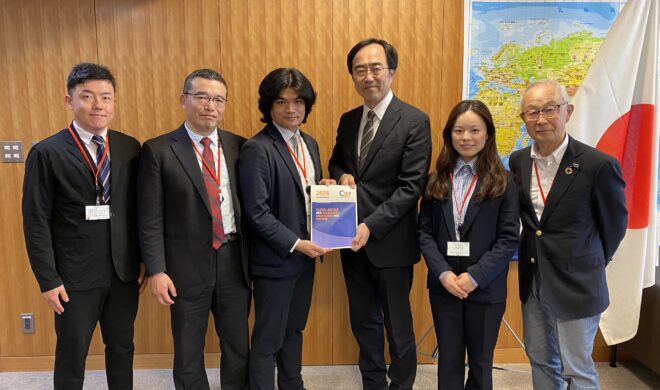
Photo courtesy of the Asian Community 
Trust

Background of the Growth of Japanese NGOs

Cultural background: (inward looking Japan)

For historical and cultural reasons, the Japanese NGOs/Citizens/Non-profit sector (referring to the citizens organizations engaged in international cooperation) used to be smaller and less advanced than those in western developed countries. This issue is rather complicated.

A few reasons could be cited to explain this level of development among Japanese NGOs. Most often the cited explanations are as follows:

(1) the Buddhist tradition is less activist-oriented than that of Christian religions and therefore does not tend to be evangelical -- evangelism, being a factor that has given rise to many western and some southern NGOs;
(2) the Japanese population is very homogeneous and group-oriented and tends to stress mutual assistance within the group before extending help outside; and
(3) Japan's Confucian tradition has led the Japanese to rely heavily on the government.

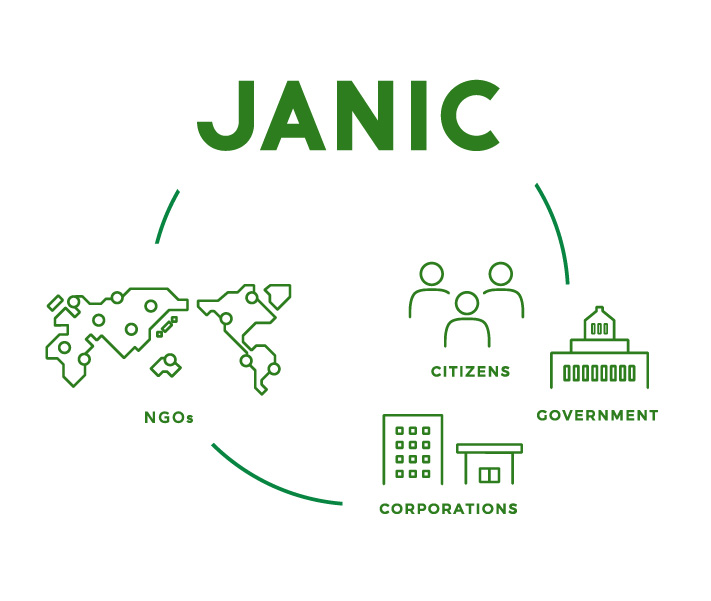
In general terms, the Japanese development model is less adversarial than the West's with government, corporations and citizens perceived as cooperating to achieve the same goal. There is less belief in the need for an independent sector and consequently, non-profit work is not seen as a "regular" profession.

Crossing the border: ("internationalization" of Japan)

However, despite these limitations, over the last 10 years, there has been a steady growth of the NGO community in Japan. Much of this growth could be seen as a result of self-initiated (voluntary) activities among citizens responding to the ever-increasing volume of basic human needs in developing regions in the world. Japanese people today are exposed to information and knowledge about people's conditions either directly through travels to these regions or indirectly through the mass media.
Another factor is pressure and encouragement both from other sectors of society and from overseas. Following the spread of Japanese private investment and Official Development Assistance (ODA) around the world, Japan has come under pressure from abroad to take on greater leadership and responsibility in the international arena. During the last 10 years, Japan has risen as an economic power and a major donor, leading to increased expectations and demands on Japanese NGOs among overseas NGOs and UN agencies.
Other specific factors that have heightened the international dimension of Japanese NGO work was the dispatch of Japanese Peace Keeping Operation (PKO) forces to Cambodia and the murder of a Japanese UN volunteer in that country.
In addition, more and more international travelers, including documented and undocumented workers from developing countries have come to Japan in search of employment.

Sparks within: (domestic pressures)

In the domestic scene, the Japanese lifestyle -- especially its over consumption of marine and forest resources -- has been under fire both domestically and internationally, prompting Japanese NGOs to conduct advocacy activities along these lines.
Japanese NGOs are also expected to act as watchdogs of Japanese companies and government agencies. Japanese NGOs have therefore grown under the encouragement and rising expectations of certain sectors of Japanese society.
There is a growing interest in NGOs among government officials, labor and business leaders and especially, university students. This growing enthusiasm could also be partially attributed to a generally sympathetic coverage of NGO activities by the Japanese press.
Japanese NGO leaders themselves see the need to grow and expand their work. They see the need not only to improve the quality and scope of their projects in developing countries, but also to work within the Japanese society to reform value systems.
Similarly, Japanese are beginning to relate themselves more closely with foreign people, especially with those of the south.

Japanese NGOs are now striving to encourage as widely as possible. Japanese citizens to broaden their cultural sensitivity and to develop an attitude toward sharing resources and knowledge. Furthermore, through the NGO movement, NGO leaders hope to widen people's participation in public policy activities. They see their international work as part of a broader movement to create a viable and influential civic or "independent" sector in Japan.

A Quick Look at Japanese NGOs...

JANIC defines NGOs as citizens-based organizations active in international cooperation.
There are 275 NGOs taken as an object of the analysis of the balance gives the following results.
30% have an annual balance of more than \5 million (US$ 43,500).
50% have an annual balance of mroe than \10 million (US$ 86,000).
20% (43 NGOs) have an annual balance of more than \100 million (US$ 860,000).


There are about 2,800 paid staff and 1,971 unpaid staff working in NGOs (*2). And there are 2,595 peoples working full time, and 2,211 peoples on part-time basis.
About 341,000 peoples are individual supporting / sustaining members of NGOs. About 7,053 companies/corporations and 3,176 Non-profit organizations support 144 NGOs. There are about 50% NGOs are supported by less than 30 companies. Only 8 NGOs are supported by more than 100 companies.

Main activities of NGOs are divided into:
Overseas work: Education, medical and health services, vocational training, environmental protection, rural development, relief and emergency assistance for refugees, fair trade
Domestic work: Development education / gobal citizenship education, advocacy, protecting human rights of foreigners in Japan


(*1)e.g:Ministry of Foreign Affairs, Japan postal Service Public Corporation and Environmental Restoration and Conservation Agency
(*2)citizens-based, voluntary organizations doing international activities

Back


Copyright (C) 2001-2008 JANIC (Japan NGO Center for International Cooperation) All Rights Reserved.


+